Wednesday, November 19, 2008

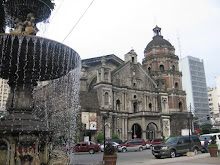
church of sta. cruz

Sta. Cruz Church, Plaza Santa Cruz, Santa Cruz, Manila, Philippines


Church of Sta. Cruz was built and administered by the Jesuits up to 1768. Adjoining was the Jesuit College of San Ildefonso, founded by Governor Alfonso Fajardo de la Tenza on January 9, 1724. The titular patroness of the church is Nuestra Señora Del Pilar, whose statue was brought from Spain prior to 1768. The confraternity of Nuestra Señora del Pilar was canonically founded in this church in 1743. On the surrounding plaza the British returned the City of Manila to Simon de Anda y Salazar in 1764.

Tuesday, November 18, 2008

pedicab


Pedicab or Padyak, a bicycle with a sidecar which is a human powered transportation in Manila and all through out the Philippines. Can accommodate a maximum of three passengers and can easily navigate the narrow streets of Manila, best alternative especially with the high prices of gasoline and when the streets are flooded, even Quentin Tarantino rode a pedicab when he was here in Manila.

Monday, November 17, 2008

plaza fair


Plaza Fair located at Plaza Lacson, Carriedo, Sta. Cruz, Manila

Plaza Fair is one of Manila's first shopping centers, thriving when Escolta used to be Manila's fashion hub. Just beside the Plaza Fair is Isettan Department Store and across it the firse ever sm store used to be called just Shoe Mart.

Sunday, November 16, 2008

banana-que


Banana-que is my favorite merienda (snack). Banana-que is a deep fried saba banana and is coated with caramelized brown sugar in a bamboo skewer, it is really delicious, i prefer to eat it hot right off the pan because i love how sticky or gummy the caramelized sugar is, yummy!

Saba banana is the most widely-eaten variety of banana in the Philippines and they are available all year round. You can eat it uncooked when ripe and aside from banana-que there are a lot of dessert variation you can prepare using saba such as turon, banana chips,
and even as ingridients in ginatan, and nilaga.


Turon (see left side of the photo), is sliced saba bananas wrapped in a lumpia wrapper (spring roll wrapper) then deep fry it similar to banana-que, some even include ripe langka (jackfruit) with the banana before wrapping.

Saturday, November 15, 2008

samalamig


The Samalamig or Palamig, from the root word lamig meaning cold, are prepared beverages that contain sago (tapioca pearls) and gulaman (gelatin), and are usually flavored with syrup from a wide variety of fruit extracts. As the name suggests, it is used to refresh and nourish everyone's thirst, especially during the hot Summer season. Usually served in plastic cups and small plastic bags used for ice, this typical Filipino beverage is being sold everywhere and to anyone who wants to satisfy the need to quench their thirst at anytime of the day. In a country filled with junk and low nutrition food, the samalamig provides the necessary vitamins and minerals needed to fill the nutrient deficiencies of the Filipino people. (Source: WikiPilipinas)

But nowadays samalamig aren't limited to sago and gulaman, you're buko juicehas been reinvented with different flavors as shown in the photo with artificial flavors orof taro,

Friday, November 14, 2008

nothing looks beautiful


nothing looks beautiful as nature's own beauty, and i will never get tried of watching at the sun sets and color the sky oh so magnificent

Thursday, November 13, 2008

stores at manila north cemetery

As i have mentioned in my previous post in Manila North Cemetery that aside from the usual flowers and candles being sold, there were a lot of food stalls when i visited during All Saint's Day, that somehow i felt like i was in a mall or a tiangge area instead of inside a cemetery with so many food stalls and other stuff being sold.

This yummy lechon is being served by Mila's Lechon inside the Manila North Cemetery.


A long line of food stalls inside the cemetery, would you believe me if i told you that most fast food chain in the Phillipines were there including Jollibee, Chowking, Andok's, etc.


I even saw lots of food stalls selling kakanin or rice cakes.


And of course there were balloon vendors as well.


i bought myself a cellphone charm (skeleton with pink hair) here for only 20pesos

Wednesday, November 12, 2008

manila sphinx


i was actually surprised when i saw this sphinx mouseleum at the manila north cemetery. i expected to see this kind at the chinese cemetery, even at the la loma cemetery but not here

Tuesday, November 11, 2008

american eagle


Found this somewhat odd group burial at an off beat path from the main avenue inside the Manila North Cemetery. There is no historical marker or any commemorative plaque explaining about this group plot. I am guessing they are among the american soldiers who were deployed here in the Philippines during World War II, any readers out here who knows?

Monday, November 10, 2008

group plots at manila north cemetery

Aside from the famous personalities or notable burials at the Manila North Cemetery, there are also group plots here.

Masonic burial grounds

Military personnel that have served the country.


Group plot of the Thomasites, a group of American teachers sent by the U.S. government to the Philippines on August 12, 1901 to establish a new public school system, to teach basic education and to train Filipino teachers, with English as the medium of instruction.

Boy Scout Cenotaph, (in honor of the 24 scouts who died in a plane crash en route to the 11th World Scout Jamboree)
Related Posts with Thumbnails