Showing posts with label church. Show all posts

Tuesday, July 03, 2012

ILOILO | Miag-ao Church


The Miag-ao Church was built in 1786 by Spanish Augustinian missionaries and was declared as part of the UNESCO World Heritage Site "Baroque Churches of the Philippines" in 1993. On the front facade, which is flanked by two watchtower belfries, one can see the unique blending of Spanish and native influences.

The central feature of the bas-relief facade is a large coconut tree which reaches almost to the apex. While an integral part of the Philippine landscape, the coconut tree is also the subject of lore. According to an old Philippine legend, the coconut tree was the only bequest from a loving mother to her two children, a tree which sustained them for life. On the church's facade the coconut tree appears as the "tree of life" to which St. Christopher carrying the Child Jesus on his shoulder is clinging to. The lesser facades feature the daily life of Miagaowanons during the time. Also depicted are other native flora and fauna, as well as native dress.


The church and its watchtowers were also built to defend the town and its people against raids by the Moros. It therefore has thick walls and, reportedly, secret passages. Indeed stretching along the Iloilo coast are defensive towers, but none that equal the size of the Miag-ao. It is because of this defensive purpose that it is sometimes referred to as the Miag-ao Fortress Church.

Source: Wikipedia

ILOILO | Molo Church


Molo is one of the seven districts of Iloilo City. It was built by Spaniards and was formerly called the Parian (Chinatown) due to its large number of Chinese residents and their business establishments in the area at the time. Its name was later changed to Moro during the frequent arrival of Muslim pirates from Mindanao until it later evolved into Molo. Molo was a town before it was absorbed by Iloilo City during its charter in 1937.


The Gothic Renaissance Church of Molo was used as a watch tower to warn the people if there are any attackers on the shore of Iloilo City. It is a fine coral stone church with Classical and Gothic details. It is also known as the feminist church because of the beautiful female saints lining inside the church.


Sometime during 1896, the site was visited by Jose Rizal, mainly to look at the Biblically inspired artwork (no longer present). It was also used as a haven for civilians during the Second World War; testament to the effects of the war are the bullet holes still present in some of its bells.


The first thing that will strike the visitor to the Molo Church are the imposing spires, which are a bright red in color. As impressive as the exterior, the interior is even more stunning. The trained eye will see that the artistry is a magnificent amalgamation of the Gothic and Romanesque architectural styles. To the casual viewer, it is an awesome view, wherein the various shades of yellow, gold and shades of brown combine to create a resplendent area for prayer and devotion.


A tour of the Molo Church will reveal the glorious altars, fashioned in the Gothic manner, and adorned by elaborate works of art. Also prominently displayed are 16 images of female saintly figures including Saint Anne, the patroness to whom the shrine is dedicated.


The views of the Molo Church are compelling at any time of the day, but it is during the afternoon that the full beauty of the magnificent structure is unveiled. Standing outside the church you can see the soft glow of the rays of the sun as they cast down on the façade. The results are unique and fascinating displays of light and shade.

Source: Wikipedia and http://www.iloiloboard.com/molo-church.php

ILOILO | jaro cathedral


The National Shrine of Our Lady of the Candles informally known as Jaro Cathedral is the cathedral seat for the Roman Catholic Archbishop of Jaro. It is located in district of Jaro in Iloilo City, in the province of Iloilo, on the island of Panay, in the Western Visayas region of the Philippines. It is known as the shrine of Our Lady of the Candles under the original patronage of Saint Elizabeth of Hungary.


The church is the famous Parish of Our Lady of Candles, also known as the Jaro Metropolitan Cathedral, the headquarters of the Archdiocese of Jaro and the site of a miraculous statue of the Virgin Mary, which was canonically crowned by the late Pope John Paul II during his visit in 1982. The image is the only religious icon in the country to have been personally crowned by a Pope.

Jaro Belfry, ruined in a 1948 earthquake, but now restored. One of the few belfries in the country that stands apart from the church.

The bell tower unusually is located across a busy street on the Jaro Plaza. Such construction arrangement is rare in the Philippines. Usually the Churches and their belfries are built adjacent to each other, or at least they are located on the same plot of land. This is a remnant of an older building that collapsed during an earthquake. The original cathedral was built in 1874 by the first bishop of Jaro, Mariano Cuartero, O.P. It was destroyed by an earthquake in January 1948 and later repaired in 1956 by the first Archbishop of Jaro, Jose Maria Cuenco.

Source: http://en.wikipedia.org/wiki/Jaro_Cathedral

Wednesday, May 11, 2011

ILOCOS: paoay church


Paoay Church (also known as the St. Augustine Church in Paoay) is a historical church located in Paoay, Ilocos Norte. During the Philippine Revolution in 1898, its coral stone bell tower was used by the Katipuneros as an observation post. Paoay Church is part of the UNESCO World Heritage List. It currently is a property of the Diocese of Laoag, Ilocos Norte. Construction of Paoay Church was started by the Augustinian friars in 1694. It was completed in 1894 led by Fr. Antonio Estavillo and was re-dedicated in 1894.


A three-storey coral stone bell tower stands a few meters away from the church. The bell tower served as an observation post in 1896 for the Katipuneros during the Philippine revolution against the Spaniards, and again by the Filipino guerillas during the Japanese occupation in World War II.

According to historians, the bell tower also served as a status symbol for the locals. The bell would ring more loudly and more times during the wedding of a prominent clan than it would during the wedding of the poor.

Portions of the church was damaged during the earthquakes in 1865 and 1885. During an excavation inside the church in 2000, a prehistoric human skeleton and fragmented ceramics were discovered and are now in display at the National Museum. Former president Ferdinand Marcos declared Paoay Church as a national treasure and is now included in the UNESCO World Heritage List.


The Church is a unique combination of Gothic, Baroque and Oriental designs. Its facade reveals Gothic affinity, its gables show Chinese elements, while the niches topping the walls suggest Javanese influence (reminiscent of the famous Boroboudur Temple).

Known as the “Earthquake Baroque” church in the Philippines, Paoay church was built of baked bricks, coral rocks, salbot (tree sap) and lumber, and has 24 carved massive buttresses for support. It is an architectural solution to the area's challenging, natural setting. Both sides of the nave are lined with the most voluminous stone buttresses seen around the islands. Large coral stones were used for the lower level while bricks were used for the upper levels of the church. The walls are 1.67 meters thick made of the same materials. Its bell tower, which is detached from its main building, is made of coral stone. It stands a safe distance away to spare the sanctuary in case of collapse. Originally, the church roof was thatched; and it is conjectured so that buttresses not only support walls but give roof access during fire and typhoon.


The rectangular facade of the church is supported by four pillasters which extend from the first to the second level outlining the arched doorway. Huge volutes or buttresses and low-relief lines are found on each side of the facade.

In Fr. Pedro Galende's book, he described the massiveness of the structure is balanced by its grace and fluidity. The church adapts the pyramidal design of the baroque style. Its details are inspired from by seal of Saint Agustine, the emblem of the king of Spain, the logo of the Pope, the “init-tao” or the sun god, and stylized Chinese clouds.

Source: http://en.wikipilipinas.org/index.php?title=Paoay_Church

Monday, May 09, 2011

ILOCOS: Bell Tower of St. Agustine Church in Bantay


Thursday, May 05, 2011

ILOCOS: Vigan - St. Paul's Metropolitan Cathedral


cathedral of vigan also known as st. paul's metropolitan cathedral 


bell tower of the cathedral of vigan


the cathedral's main door

just wondering if this is a coat of arms of something? just above the main door of the cathedral. anyone enlighten me please, thanks.

Cathedral of Vigan.  Like most stories of centuries old churches in the Philippines, this cathedral was first build on wood, has been on fire and toppled by earthquake but erected again on the same spot, and has been occupied by the american forces during the war.

so i guess, you could say that our churches are stubborn and strong eh? no matter how many times it goes down... it will always rise.

Friday, April 01, 2011

visita iglesia in manila

staying in manila this coming holy week? Go and do a visita iglesia or just simply visit these beautiful churches then

holy week is about a few weeks from now, and for catholics the visita  iglesia or bisita iglesia has been a tradition of the faithful. and here in the Philippines, visita iglesia or church visits is part of the holy week, usually carried out on holy thursday.  Some say you have to visit seven churches while others said it should be 14 churches, the faithful say or pray the stations of the cross with one station in each church.

i was raised a catholic but the first time i joined this tradition was in 2008 only, we have visited 14 churches in batangas, and the year after that we have visited churches in pampanga and tarlac.
have i told you that i love churches? not because i am a religious person but i just love church architecture and i am a sucker when it comes to old things and most of our churches are centuries old. i haven't doen a visita iglesia yet in manila but i would like to recommend the following churches you should visit come this holy week.

yes, manila is full of churches and they are all beautiful. so herewith are the list of manila churches you can visit.


2. San Agustin Church (Intramuros) - http://mayniladailyphoto.blogspot.com/2007/05/san-agustin-church.html


4. Espiritu Santo Catholic Church (Tayuman)
5. St. Vincent de Paul Parish (San Marcelino St., Malate - inside Adamson University - http://mayniladailyphoto.blogspot.com/2007/08/this-ones-church-alright.html


6. Malate Catholic Church (M.H. Del Pilar St., Malate) - http://mayniladailyphoto.blogspot.com/2008/04/malate-church.html


8. Binondo Church or Minor Basilica of St. Lorenzo Ruiz (Quentin Paredes St., Binondo) - http://mayniladailyphoto.blogspot.com/2007/07/inside-binondo.html


9. Quaipo Church or Basillica Minore of the Black Nazarene (Quiapo) - http://mayniladailyphoto.blogspot.com/2007/05/quiapo.html


10. San Sebastian Church (Quiapo, Manila) - http://mayniladailyphoto.blogspot.com/2008/08/san-sebastian-church-facelift.html


11. Sto. Nino de Tondo Church (Tondo, Manila)- http://mayniladailyphoto.blogspot.com/2007/10/sto-nio-de-tondo.html


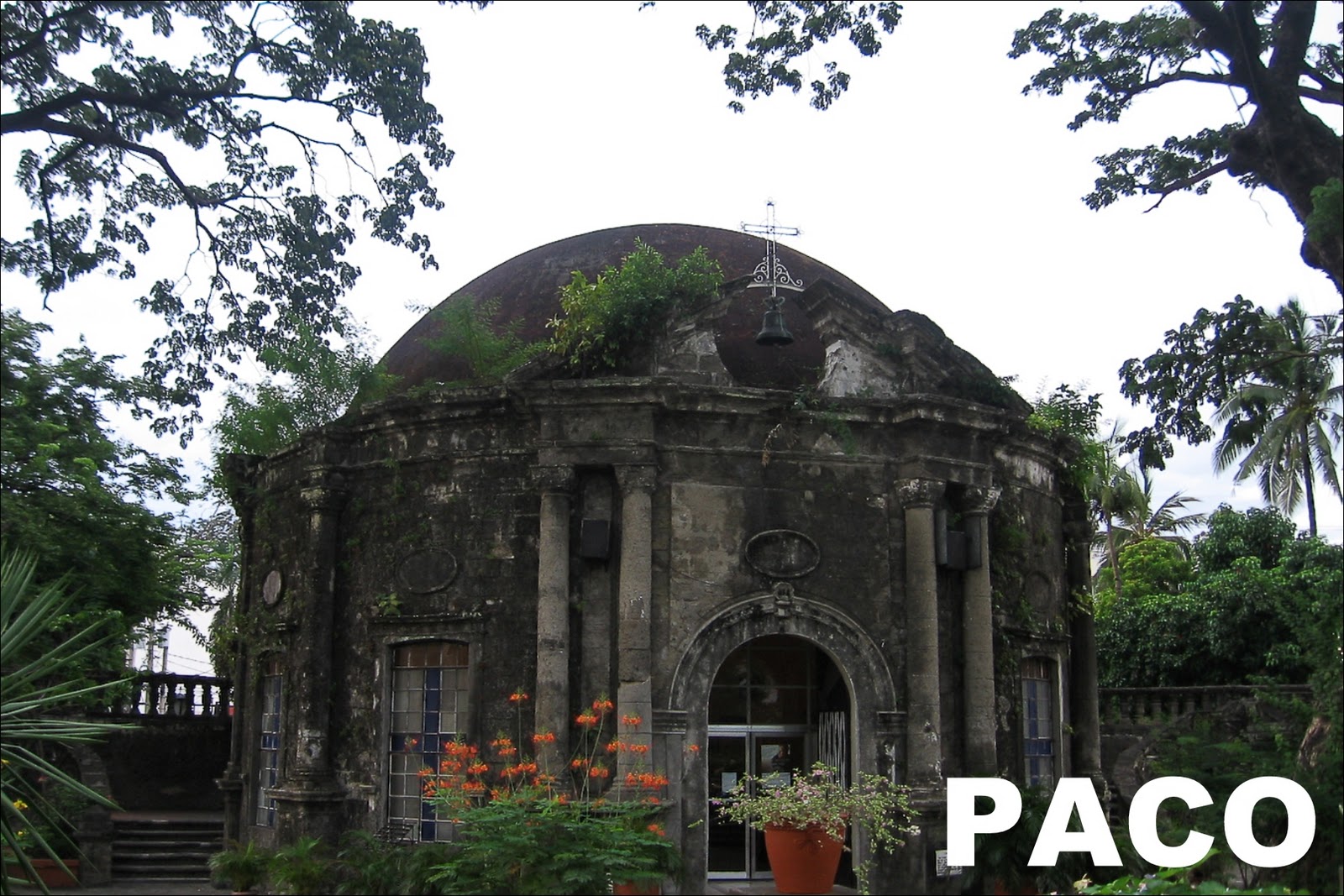
12. St. Pancratius Chapel or Paco Park Church (Paco Park, Manila) - http://mayniladailyphoto.blogspot.com/search/label/paco%20cemetery

13. UST Church (inside University of Sto. Tomas) - PS i know this isnt the church inside the UST but i dont have the photo of the church but the main building looks like one anyways :)
http://mayniladailyphoto.blogspot.com/2007/08/simply-called.html


14. Baclaran Church or the Mother of Perpetual Help Shrine - can't find the church's photo in my archive but this photo is one of the candle offering stand just outside the church. will just replace the photo when i find it.


Tuesday, March 08, 2011

san juan nepomuceno church


the San Juan Nepomuceno church in San Juan, Batangas.  i have attended many weddings and funerals masses in this church and according to our grandfathers, this church is already old... built during the Spanish colonial period. even as a kid, i have always love the structure of this old church... thanks to juday and ryan for putting this beautiful church on the map! :D

Thursday, March 03, 2011

camiguin island: gui-ob old church ruins

One of the tourist attraction in Camiguin Island is the Gui-Ob Old Church ruins. a volcanic eruption in 1871 wiped out the Spanish settlement of Catarman that was established in 1697.

The remains of an Old Spanish church, ruins of adobe walls, belfry and convent are mute witnesses to the wrath of nature. It also allows us a glimpse into the culture of Spanish-era Camiguin.


it was said that the walls of the church were made of corals, and yes it is. take a closer look.

now there is a small chapel that stood inside where the original church use to stand.

Thursday, January 28, 2010

veniality


To be a saint is the exception; to be upright is the rule. Err, falter, sin, but be upright. To commit the least possible sin is the law for man. Sin is a gravitation. - Victor Hugo, 'Les Miserables'
Related Posts with Thumbnails